

Are Floor Estimates Free? What Homeowners Should Know
A flooring estimate should do more than give you a number to compare. It should help you understand what your home needs, what the finished floor will look like, and what it will take to install it correctly. So, are floor estimates free? Often, yes. Many professional flooring contractors offer a no-cost initial estimate, especially for standard residential projects. But the details of that visit matter far more than the word “free.”
A worthwhile estimate gives you clarity before you commit. It accounts for the condition of your existing floor, the materials that fit your household, the preparation required, and the installation work needed for a durable result. That is how you avoid a low quote that grows after the project begins.
Are Floor Estimates Free for Most Homeowners?
For many homeowners in Mechanicsburg and across Pennsylvania, an initial flooring estimate is free. A contractor may visit your home, measure the space, discuss your goals, show material options, and provide a project proposal without charging for that first consultation.
This is especially common for projects such as luxury vinyl plank, laminate, hardwood replacement, and carpet removal with new flooring installation. The contractor benefits from seeing the project firsthand, and you benefit from recommendations based on your actual rooms instead of a rough square-foot estimate over the phone.
Still, free does not mean every service connected to an estimate is included at no cost. A basic consultation and measurement are different from a detailed design plan, moisture testing, insurance documentation, architectural review, or an inspection of a complicated subfloor issue. If a fee applies, a professional contractor should explain it before scheduling the visit.
What a Professional Flooring Estimate Should Include
A good estimate is built around your home, not just the size of the room. Flooring is a foundational investment, and the finished result depends on preparation as much as the material you select.
During an in-home visit, the contractor should measure each area carefully and look at transitions between rooms, door clearances, stairs, closets, and nearby fixed features such as cabinets or fireplaces. These details affect both material quantities and installation labor. A floor that looks simple in a photograph can require precise cuts, leveling, or custom trim work once the project is measured in person.
The estimate should also address the existing floor. Removing old vinyl, tile, carpet, hardwood, or laminate can involve different levels of labor and disposal. Uneven subfloors, loose plywood, moisture concerns, and damaged areas may need attention before new flooring goes down. Skipping this conversation may create a cheaper quote up front, but it can put the durability and appearance of the new floor at risk.
Material selection belongs in the estimate as well. A family with pets, children, and active daily traffic may prioritize scratch resistance, water resistance, and easy maintenance. A homeowner restoring a traditional living room may prefer the warmth and long-term value of hardwood. Laminate can provide an attractive, budget-conscious option for many rooms, while luxury vinyl plank offers a broad range of styles with practical performance in busy spaces.
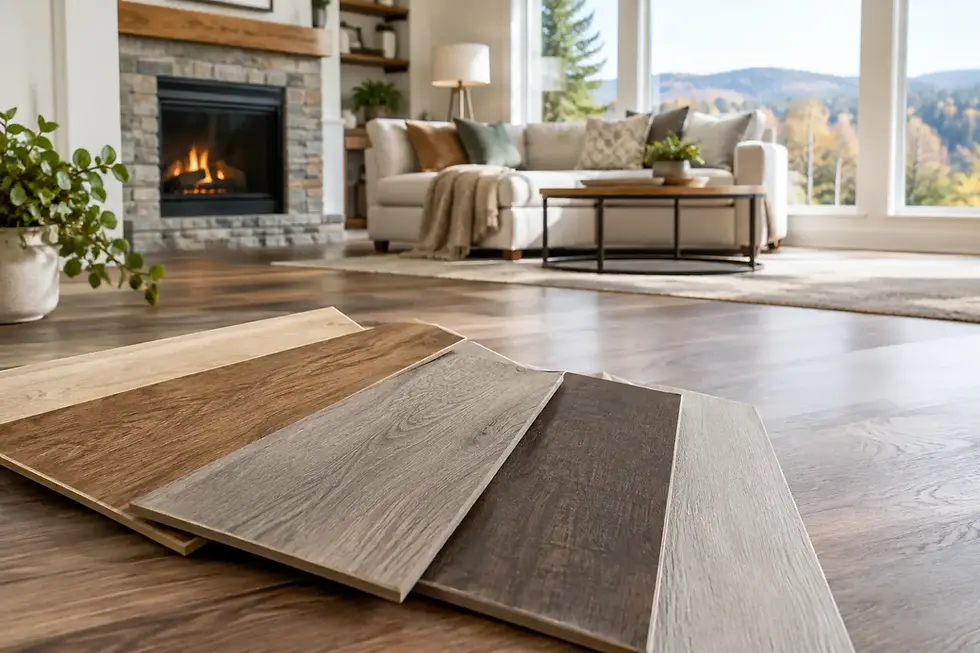
At Piruzza Flooring LLC, an in-home mobile showroom helps homeowners view samples in their own lighting, alongside their wall colors, cabinetry, and furnishings. That context can make the difference between a color that looks good in a store and a floor that feels right in your home every day.
Materials and Installation Should Be Separated Clearly
You should be able to see what you are paying for. A clear proposal generally separates flooring materials from installation labor and identifies related items such as underlayment, adhesive, trim, transitions, furniture moving, demolition, and disposal.
This does not mean every estimate will use the same format. Some contractors provide a bundled project price, while others itemize each part of the work. Either approach can be fair if the scope is clear. What matters is knowing whether the quote includes everything needed to complete the floor properly.
Ask whether the quoted material is a specific product, color, thickness, and wear layer, or simply an allowance. An allowance can be useful while you are still choosing materials, but it should be realistic. If the allowance is too low for the style you want, the final project price will change once selections are made.
When May a Flooring Estimate Have a Fee?
Some projects require more than a standard estimate. In those situations, a contractor may charge for specialized evaluation, and that is not automatically a red flag. The key is transparency.
A fee may be reasonable when a project involves extensive water damage, structural repairs, detailed moisture diagnostics, commercial site coordination, complex layouts, or formal documentation needed for a property claim. Large commercial spaces can also require planning around operating hours, safety requirements, phased installation, and material logistics.
A contractor may also charge for a design consultation that goes beyond selecting flooring. For example, a bathroom remodel involving layout changes, fixture selection, tile design, and multiple trades requires a deeper level of planning than replacing a bedroom floor.
Before agreeing to a paid visit, ask what you will receive for the fee and whether it can be credited toward the completed project. A straightforward answer is a good sign. You should never be surprised by a consultation charge after the work has been performed.
Why an In-Home Estimate Is Better Than a Phone Quote
Phone estimates can be helpful for establishing a budget range, but they are not a substitute for seeing the space. Square footage alone cannot show whether a room has a low spot near the exterior wall, a damaged section beneath old carpet, or a tight doorway that needs careful transition work.
An in-home estimate also lets you compare materials where they will live. Natural light can make warm oak look more golden, gray flooring look cooler, and patterned surfaces appear more or less pronounced. Holding samples next to your cabinets and paint colors is a practical design step, not an extra luxury.
For homeowners considering luxury vinyl plank, hardwood, or laminate, this is also the time to discuss lifestyle. A beautiful floor needs to support how you use your home. The best choice for a quiet formal dining room may not be the best choice for a mudroom, a kitchen, or a home with large dogs.
How to Compare Flooring Estimates Without Chasing the Lowest Price
When two estimates differ significantly, look beyond the total at the bottom. One contractor may have included subfloor preparation, removal, transitions, and furniture moving while another has not. One may be pricing a premium material with stronger wear protection, while another is using a thinner product that will not perform the same way.
Compare the scope of work, the specific materials, the preparation plan, the installation details, and the warranty coverage. Ask who will perform the installation and how the crew handles dust, debris, room protection, and cleanup. Skilled installation protects the material investment and helps the floor perform as intended for years.
It is also wise to ask about potential conditions that could change the price. No contractor can predict every hidden issue beneath an existing floor, but they should explain the common possibilities and how they will communicate if additional work is needed. Clear project coordination is one of the strongest indicators that your home will be treated with care.
Questions Worth Asking During the Estimate
You do not need construction experience to ask smart questions. Ask whether subfloor repairs or leveling are included, how much extra material is planned for cuts and future repairs, and whether transitions and baseboard work are part of the proposal.
Also ask about the expected project schedule, material lead time, warranty protection, and what you need to do before installation day. If the answers are vague, the estimate may not be complete enough to support a confident decision.
A Free Estimate Should Leave You More Confident
The value of a flooring estimate is not that it costs nothing. Its value is that it gives you a realistic picture of the project before your home is disrupted. You should come away knowing what flooring suits your rooms, what preparation is required, what the investment covers, and what the installation process will look like.
Choose a contractor who takes the time to measure carefully, listen to how you live, and explain the work in plain language. The right floor should bring comfort, lasting style, and confidence every time you walk through the door.


Comments