

How to Match Flooring With Cabinets Beautifully
A floor and cabinet combination can make a renovated kitchen feel custom and considered - or make quality materials compete with each other. The goal when you match flooring with cabinets is not to make every surface the same color. It is to create a balanced room where the cabinetry, flooring, countertops, and natural light work together for years to come.
For Pennsylvania homeowners planning a kitchen, bath, or whole-home update, this decision deserves more than a quick comparison of small samples under showroom lighting. Cabinet color is a major visual anchor, while flooring carries through the room and often connects it to adjoining spaces. Choosing them together helps create the comfortable, durable transformation you want from a long-term home improvement.
Start With Undertones, Not Just Color Names
A cabinet described as white may be bright and cool, soft and creamy, or lightly gray. A floor called brown may lean golden, red, gray, or neutral. Those subtle undertones have more influence on the final look than broad labels like white oak, gray, or beige.
Warm cabinets generally have yellow, cream, red, or honey undertones. They pair naturally with flooring that has warm or neutral character, such as natural oak, medium brown wood tones, and many warm-toned luxury vinyl planks. Cool cabinets often carry blue, crisp white, charcoal, or gray undertones. They can work beautifully with neutral oak looks, soft greige flooring, or clean medium-to-dark tones that do not turn noticeably orange beside them.
Neutral finishes offer the most flexibility, but they still need a closer look. Greige cabinets may shift warmer in afternoon sun and cooler under LED lighting. A neutral floor with too much gray can make cream cabinetry look yellow, while a strongly golden floor can make cool white cabinets feel stark. Place large samples side by side in the actual room before committing.
Look at Samples in Your Home
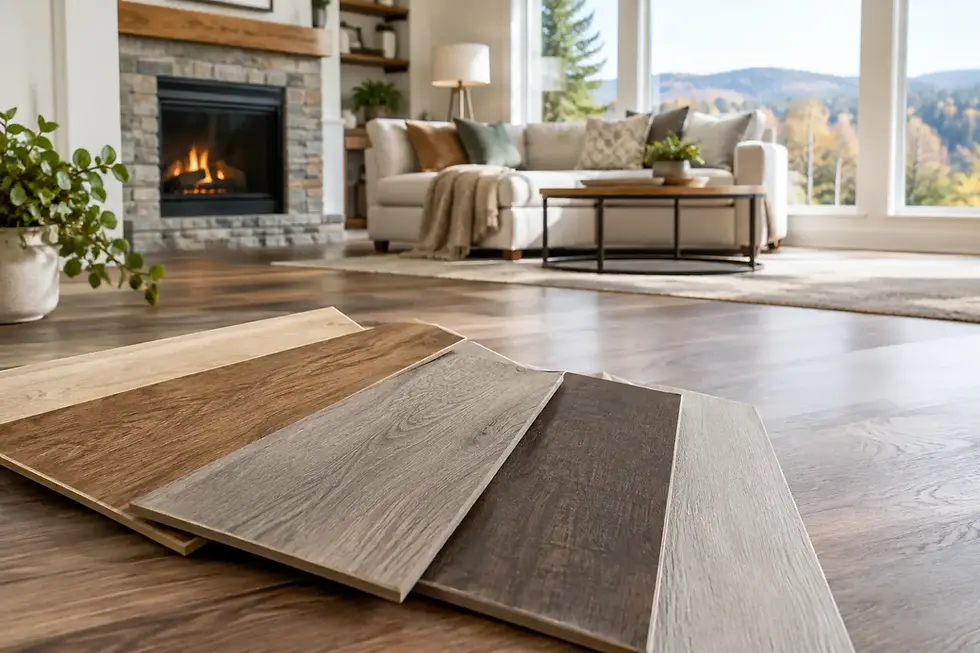
Lighting changes everything. A flooring sample that looks calm in a store can appear much darker in a north-facing kitchen, while a warm floor may become substantially more golden beside a sunny window. View samples in morning light, evening light, and under the fixtures you use most often.
This is where an in-home consultation is especially valuable. Piruzza Flooring LLC brings material options to your space so you can judge color, texture, and scale against your cabinetry, walls, countertops, and the lighting that defines your everyday home.
Match Flooring With Cabinets Through Contrast
A successful room usually has enough contrast to give each finish a distinct role. When cabinets and floors are nearly identical in color, the room can feel flat unless other elements introduce separation. The answer is not always dramatic contrast, but it should be intentional.
White or light cabinets provide the broadest range of flooring choices. Medium natural wood looks add warmth and definition without making the room heavy. Dark floors create a more formal, grounded appearance, though they may show dust, pet hair, and scratches more readily than medium tones. Light flooring can make a compact kitchen or bathroom feel more open, especially when paired with warm white, pale gray, or natural wood cabinets.
Dark cabinets benefit from a floor that keeps the room from feeling closed in. Light-to-medium flooring often provides that balance, particularly in homes with limited natural light. A pale oak-inspired luxury vinyl plank, light hardwood, or a neutral laminate can brighten the lower half of the room while allowing deep navy, black, espresso, or charcoal cabinetry to remain a focal point.
Wood cabinets and wood-look flooring can absolutely work together, but avoid trying to make them match exactly. Near-matches often look accidental because the grain, sheen, and stain tone are slightly different. Instead, choose related undertones with visible contrast. For example, medium walnut cabinetry can pair with a lighter natural oak floor, while honey oak cabinets may look better with a deeper neutral brown plank than another orange-toned wood finish.
Let the Countertop Help Make the Decision
Cabinets and flooring are the largest surfaces, but countertops often act as the bridge between them. A countertop with warm veining can connect creamy cabinets to a warm-toned floor. A cooler white-and-gray surface can support gray cabinetry with a neutral oak floor. Bring countertop samples into the selection process early, even if the final slab has not been chosen.
Pay attention to pattern as well as color. If your countertop has dramatic movement, a quieter floor may give the room needed visual rest. If the countertop and cabinets are simple and understated, flooring with natural grain variation can add depth without overwhelming the space.
Hardware, paint, and backsplash matter, but they are easier to change later. Flooring and cabinets are foundational investments. Let those major finishes lead the palette, then use the smaller elements to refine the look.
Choose a Material That Fits How the Room Is Used
The right visual combination still needs to perform. A busy family kitchen, mudroom, rental property, or commercial space may require different flooring priorities than a low-traffic formal dining room.
Hardwood offers genuine character, natural warmth, and long-term appeal. It works especially well with classic, transitional, and higher-end traditional interiors. It can be refinished over time, but it also requires thoughtful care around moisture, spills, and heavy wear. In kitchens, hardwood is a beautiful choice when homeowners are prepared to maintain it and address water promptly.
Luxury vinyl plank is a practical option for active homes because it offers realistic wood visuals with strong water resistance, comfortable footing, and straightforward upkeep. It can create the look of natural oak, hickory, or wider-plank hardwood while standing up well to pets, children, and everyday kitchen traffic. The key is choosing a quality product and having it installed on a properly prepared subfloor.
Laminate flooring can offer attractive wood styling and dependable value, particularly in dry spaces and projects with a focused budget. Modern laminate has come a long way in texture and visual realism. Its water performance varies by product, so material selection should be based on the room rather than color alone.
For a bathroom remodel, flooring should coordinate with vanity cabinets while prioritizing moisture management. Wood-look luxury vinyl often offers a warm alternative to cold tile, especially beside painted vanities or natural wood cabinetry. A professional installer can help ensure the product, transitions, and edge details suit a wet environment.
Consider the Flow Beyond the Kitchen
A kitchen floor rarely stands alone. It may meet hardwood in a family room, tile at an entry, or another flooring type in a nearby bathroom. Before selecting a cabinet-floor combination, look at the paths through the house.
Using one flooring material across connected living spaces can make the home feel larger and more cohesive. If you need a transition, choose finishes with compatible undertones rather than forcing an exact match. A neutral medium oak luxury vinyl floor, for instance, can connect comfortably to existing warm hardwood in an adjoining room even when the species and grain are different.
Transitions should also be installed cleanly and purposefully. A poorly planned threshold can interrupt an otherwise polished renovation. Professional measurements and layout planning help maintain visual flow while accommodating movement, height differences, and the demands of each material.
Avoid These Common Cabinet and Floor Pairing Mistakes
The most common mistake is selecting materials separately. Cabinets may be ordered first, then flooring chosen months later from memory or a phone photo. Colors photographed under different lighting are unreliable, and small samples do not show enough grain variation to predict the full floor.
Another issue is following a trend without considering the home. Very cool gray floors can look dated or disconnected in a house with warm trim, traditional furnishings, and cream walls. On the other hand, an overly rustic, high-variation plank may compete with sleek contemporary cabinetry. Timeless does not mean plain. It means choosing finishes that belong to the architecture, light, and lifestyle of the space.
Finally, do not overlook sheen. High-gloss flooring and glossy cabinets can create glare and highlight everyday smudges. Matte and low-sheen finishes tend to feel more forgiving and are often a strong fit for busy households seeking an elevated but livable result.
Build Confidence Before Installation
Before ordering, review larger samples with the cabinet door, countertop, wall paint, and any nearby existing floors. Look at the combination from the doorway, at standing height, and near windows. Ask how the flooring will be installed, where transitions will fall, and whether the chosen product is suitable for your traffic level and moisture exposure.
A well-matched floor and cabinet pairing is less about finding two identical colors and more about creating a room with balance, purpose, and lasting comfort. When samples are viewed in the home and materials are selected for both style and performance, the finished space feels right every time you walk through the door.


Comments