

Vinyl Plank Versus Tile Flooring Compared
A busy kitchen, a mudroom full of wet shoes, and a bathroom that needs a fresh look can all raise the same question: vinyl plank versus tile flooring, which is the better investment? Both materials can handle moisture better than many traditional flooring options, but they create very different experiences underfoot, require different installation methods, and suit different homes.
For Pennsylvania homeowners, the right choice is rarely just about a sample board or showroom display. It comes down to how a room is used, what is below the floor, the look you want to live with for years, and how much disruption your project can accommodate.
Vinyl Plank Versus Tile Flooring: The Everyday Difference
Luxury vinyl plank, often called LVP, is a resilient floor made in layered planks that can closely resemble hardwood, natural stone, or ceramic tile. It is warmer and softer than tile, making it a comfortable choice for kitchens, bedrooms, finished basements, living areas, and family spaces where people spend long stretches standing or walking.
Tile is a hard-surface material, typically ceramic or porcelain, installed with mortar and grout. It brings a substantial, permanent feel to bathrooms, entryways, laundry rooms, and kitchens. Porcelain tile in particular is valued for its strength and low water absorption, while ceramic tile offers a broad range of colors, patterns, and price points.
The immediate difference is comfort. Vinyl plank has more give underfoot and does not feel as cold on winter mornings. Tile is firm, durable, and cool. Some homeowners prefer that crisp, solid feeling, especially in a bathroom, while others find it tiring in a kitchen where meals, homework, and gatherings keep them on their feet.
Neither is automatically better. A first-floor kitchen that opens into a living room may benefit from continuous vinyl plank for a warmer, more cohesive design. A shower surround, bathroom floor, or entry exposed to frequent rain and snow may call for the long-term water resistance and classic character of tile.
Water Resistance Is Not the Same as Waterproofing
Both flooring types are commonly chosen for moisture-prone rooms, but they protect a home in different ways.
Quality vinyl plank products can be waterproof at the surface. Spills, pet accidents, and everyday splashes generally will not damage the plank itself when cleaned promptly. That makes LVP practical for active households. However, water can still work through poorly sealed edges, gaps, or transitions and reach the subfloor below. A dishwasher leak or major plumbing issue can affect the installation even if the vinyl material survives.
Properly installed porcelain or ceramic tile is exceptionally resistant to water. It is often the stronger choice for bathroom floors, shower areas, and spaces with regular moisture exposure. The grout joints are the consideration. Traditional grout needs periodic cleaning and may need sealing, depending on the product used. Cracked grout or failed caulk around the perimeter can create a path for water, which is why installation details matter as much as the tile itself.
For a full bathroom remodel, tile offers a natural way to extend a coordinated design from floor to shower walls. For a powder room, laundry room, or basement refresh where speed, comfort, and budget are top priorities, vinyl plank may be the more practical fit.
Installation Sets the Foundation for Performance
A floor can be made from premium materials and still disappoint if the preparation is rushed. This is especially true when comparing vinyl plank and tile.
Vinyl plank can often be installed more quickly than tile, particularly when a floating click-lock system is appropriate for the product and the existing subfloor. It does not require mortar, grout, or the same curing time as tile. That can reduce the time a room is out of service and makes it appealing for occupied homes or commercial spaces with tight schedules.
Still, vinyl plank needs a clean, dry, and properly prepared surface. Uneven areas can telegraph through the floor or place stress on locking edges. Existing flooring, floor height, door clearances, and transitions into adjoining rooms all need to be evaluated before installation begins.
Tile demands more preparation and greater precision. The subfloor must be stable enough to limit movement, flat enough to support the tile, and properly prepared for the selected setting materials. Large-format tile, patterned layouts, and natural-stone looks all raise the importance of accurate planning. Tile installation also involves cure time before the room can return to normal use.
That extra labor is not simply a line item. It is what helps prevent loose tile, uneven surfaces, cracked grout, and water-related problems later. Professional installation protects the appearance and lifespan of either choice.
Comparing Cost Beyond the Material Price
Vinyl plank is often the more budget-conscious option when total project cost is considered. The material can be competitively priced, and the installation process is typically less labor-intensive than tile. It can also be installed across larger connected spaces without the visual interruption of grout joints, helping homeowners update several rooms with one coordinated material.
Tile ranges widely in cost. Basic ceramic options can be affordable, while porcelain, specialty finishes, large formats, mosaics, and detailed patterns can increase the investment. Labor is generally higher because of substrate preparation, layout work, cutting, setting, grouting, and finishing.
The better value depends on the project. A homeowner preparing a large living area, basement, or rental property for daily use may find that luxury vinyl plank delivers the right balance of appearance, comfort, and cost. A homeowner creating a primary bathroom designed to remain in place for decades may decide tile is worth the added investment.
It is also smart to factor in replacement. If a vinyl plank floor is damaged, an individual plank may be replaceable when matching material is available. Tile can also be repaired, but matching a discontinued tile or protecting surrounding pieces during removal can be more challenging. Keeping a small supply of leftover material is a practical step with either flooring type.
Design Choices for a Home That Feels Connected
Vinyl plank has grown far beyond the flat, artificial looks many homeowners remember. Today’s premium LVP can offer realistic wood grain, matte finishes, varied plank lengths, and tones that suit traditional, modern, farmhouse, and transitional interiors. It is especially effective when you want the visual warmth of wood without placing real hardwood in a high-moisture area.
Tile provides design flexibility of a different kind. It can create clean, architectural surfaces, whether you prefer a quiet stone-look porcelain, a bold patterned floor, or a classic small-format mosaic. Grout color also becomes part of the design. Matching grout can create a softer, continuous look, while contrasting grout can highlight a layout and give the room more definition.
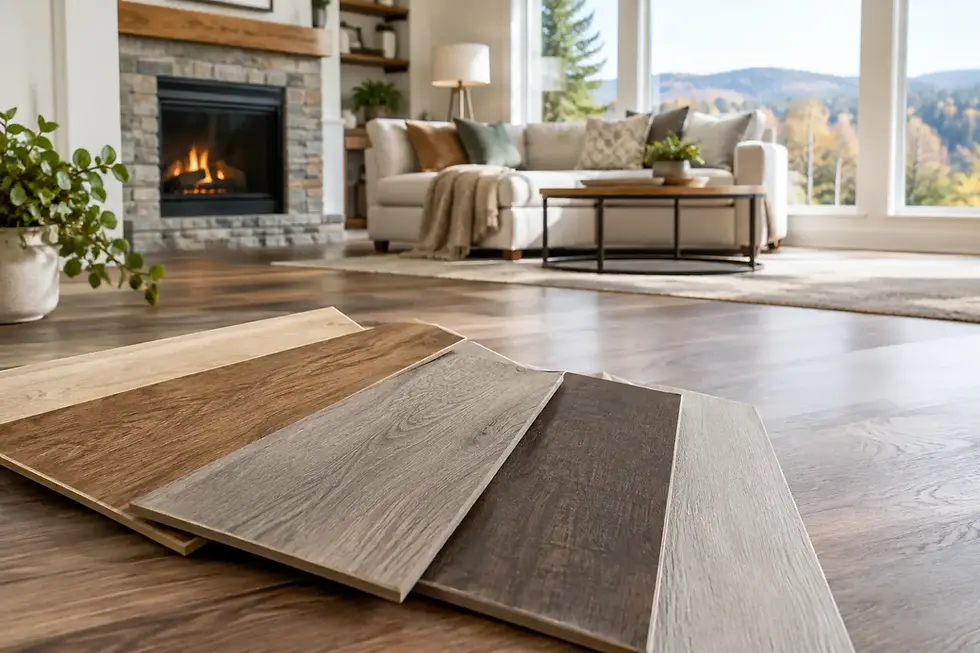
Consider sightlines before choosing. In an open-concept main level, a wood-look vinyl plank can make the kitchen feel connected to the dining and living spaces. In a bathroom, tile can create a distinct retreat with a more tailored, lasting finish. The samples should be viewed in the actual room, where natural light, cabinet colors, wall paint, and adjacent flooring can change how a color reads.
Maintenance, Durability, and Real Family Life
Vinyl plank is easy to maintain. Regular sweeping or vacuuming with a hard-floor setting and a manufacturer-approved cleaner are usually enough. It resists many everyday scratches and stains, although heavy furniture, sharp objects, and dragging appliances can still damage the surface. Selecting a quality wear layer and using furniture pads are worthwhile for active homes.
Tile is also straightforward to clean and stands up well to heavy traffic. Porcelain is particularly strong against scratches, moisture, and stains. The trade-off is that tile can chip under a hard impact, and grout lines need more attention than a plank floor. A well-maintained tile floor can last for decades, but it is not as forgiving when a glass dish falls or a child takes a tumble.
For homes with pets, children, and frequent entertaining, comfort may be the deciding factor. For homes that prioritize maximum surface durability in a wet area, tile may lead the comparison. The room should decide the material, not a one-size-fits-all rule.
Choosing the Right Floor for Your Project
A flooring decision works best when it starts with the home rather than a trend. Measure the traffic, identify moisture risks, consider how long you plan to stay, and think about the adjoining rooms. Then compare samples under your own lighting and discuss what the existing subfloor requires.
Piruzza Flooring LLC helps Pennsylvania homeowners make those decisions with professional guidance and material samples brought directly into the space. Seeing vinyl plank and tile beside your cabinetry, paint, and furnishings makes the choice clearer than viewing a small sample under store lighting.
Choose the floor that supports the way your home actually works. The best result is not simply a beautiful surface on installation day. It is a floor that still feels comfortable, performs confidently, and makes the room more enjoyable years from now.


Comments