
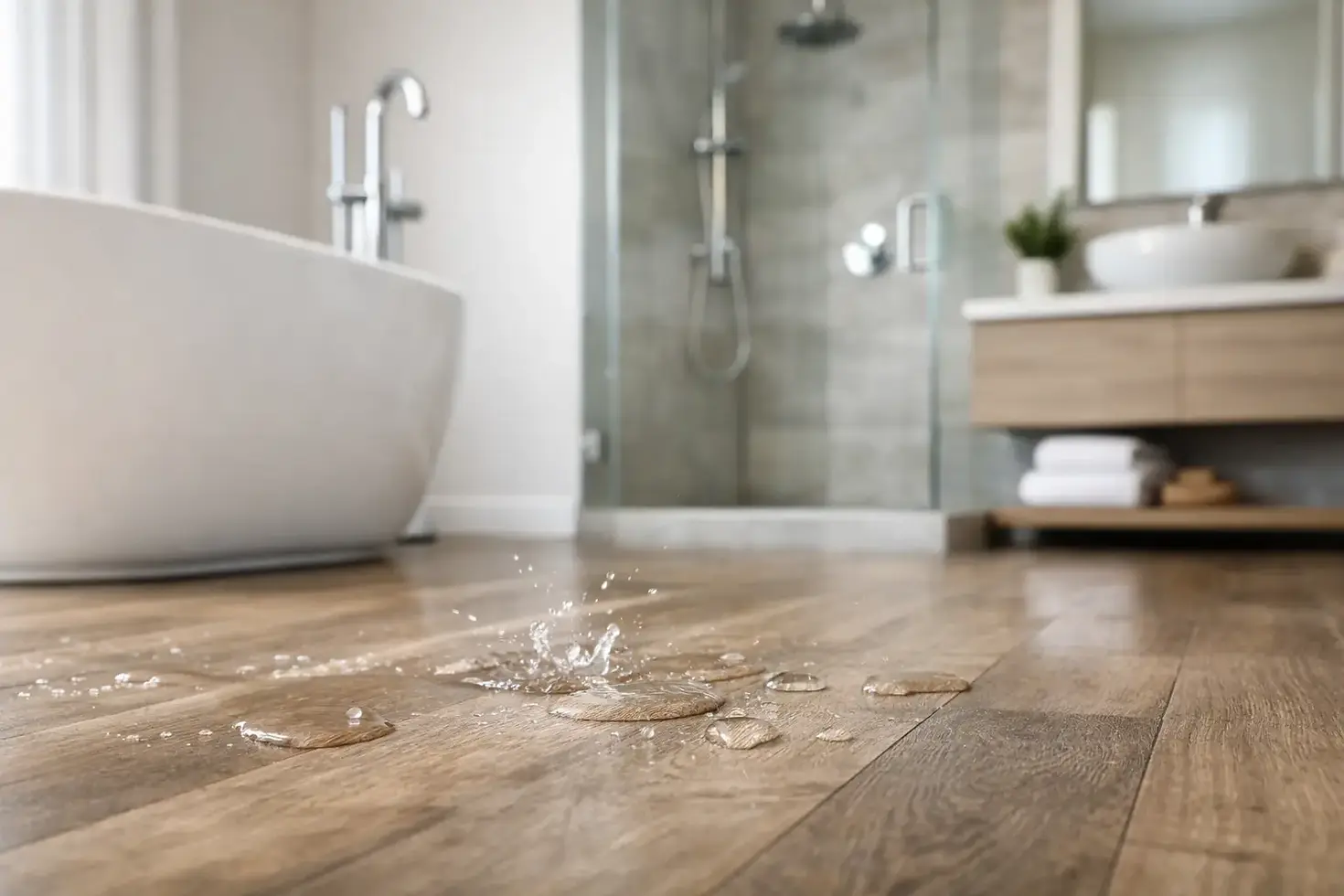
Waterproof Flooring for Bathroom That Works
A bathroom floor has to handle more than the occasional splash. It faces wet feet after showers, humidity from hot baths, drips around the vanity, and the rare but serious leak that can find its way below the surface. Choosing waterproof flooring for bathroom spaces means looking beyond color and style to choose a floor that protects the room, feels good underfoot, and still looks right years from now.
For many Pennsylvania homeowners, the best choice is not simply the material with the strongest water claim. It is the material that suits the bathroom’s use, the condition of the subfloor, the home’s style, and the quality of installation. A beautiful floor can only perform as well as the surface beneath it and the details around its edges.
What “Waterproof” Really Means in a Bathroom
Waterproof and water-resistant are often used as if they mean the same thing, but the difference matters. Waterproof flooring is designed so that water will not damage the flooring material itself when spills are cleaned up in a reasonable amount of time. Water-resistant flooring can handle limited moisture, but prolonged exposure may cause swelling, staining, or damage at the seams.
Even a waterproof product does not make an entire bathroom waterproof. Water can still move through poorly sealed joints, around a toilet base, beneath trim, or into an unprotected subfloor. That is why professional preparation and installation are as important as the flooring selection.
In a powder room, where moisture is limited, homeowners have more flexibility. In a full bath used by a busy family, the floor needs a higher level of moisture protection, dependable traction, and easy cleanup. A hall bathroom used by children may call for a different solution than a quiet primary bath with a walk-in shower.
Best Waterproof Flooring for Bathroom Renovations
Luxury Vinyl Plank and Luxury Vinyl Tile
Luxury vinyl plank, often called LVP, is one of the strongest choices for modern bathroom renovations. Quality vinyl flooring has a waterproof core or construction, comfortable feel, and a wide range of realistic wood and stone visuals. It gives homeowners the warm look of hardwood without bringing natural wood’s moisture concerns into the bathroom.
LVP works especially well when you want visual continuity between a bathroom and an adjacent bedroom, hallway, or dressing area. Wider planks and natural oak-inspired colors can make a compact bath feel calmer and more connected to the rest of the home. Luxury vinyl tile offers a similar moisture advantage with stone, concrete, or ceramic-inspired designs.
The trade-off is that LVP is not a substitute for correcting an uneven or damaged subfloor. A floor that is not properly prepared can cause movement, visible gaps, or premature wear at the locking joints. The right product, careful layout, and clean perimeter details make the finished space look intentional rather than temporary.
Sheet Vinyl
Sheet vinyl remains one of the most practical options for bathrooms, particularly in spaces where maximum surface coverage matters. Because it can be installed with very few seams, it offers excellent protection against everyday splashes and wet feet. It is also softer and warmer underfoot than ceramic tile.
Today’s sheet vinyl is available in far more refined patterns than many homeowners expect. Stone looks, terrazzo-inspired designs, and understated tile patterns can create a polished bathroom without the cool feel or grout maintenance of tile. It is an especially sensible choice for secondary baths, laundry-adjacent baths, and budget-conscious remodels.
Its limitation is design flexibility. Seams may still be necessary in larger rooms, and sheet vinyl does not create the individual-plank or individual-tile look that some homeowners prefer. Precise measuring and installation are essential because a poor cut around a vanity, tub, or toilet can compromise both appearance and performance.
Porcelain and Ceramic Tile
Porcelain and ceramic tile are established bathroom materials for good reason. Tile is highly water-resistant, durable, and available in almost any style, from timeless marble looks to modern large-format concrete visuals. Porcelain is generally denser and less absorbent than ceramic, making it a strong choice for wet areas.
However, tile itself is only one part of a moisture-managed floor. Grout is not waterproof, and the installation system beneath the tile matters greatly. In bathrooms with showers, tubs, or frequent moisture, the proper waterproofing membrane, backer system, and transitions protect the structure below.
Tile can feel cool underfoot, especially during Pennsylvania winters, though radiant heat can change that experience completely. Textured or matte-finish tile is often a better choice for bathroom floors than highly polished tile because it provides more slip resistance when wet. The right tile can deliver a lasting, elevated finish, but it requires a level, well-prepared foundation and skilled installation.
Waterproof Laminate: Proceed With Product-Specific Care
Some laminate products are marketed as waterproof or highly water-resistant. These options can be attractive because they offer wood visuals and may fit a particular budget. Still, bathroom use requires close attention to the manufacturer’s specifications.
Traditional laminate has a fiberboard core that can swell when moisture reaches the seams or edges. Newer waterproof lines may offer stronger protection, but their performance depends on correct installation, approved sealants where required, and quick cleanup of standing water. Not every waterproof laminate is approved for every bathroom setting.
For a low-moisture powder room, a manufacturer-approved laminate may be a reasonable fit. For a full bathroom with a shower, active family use, or a history of plumbing issues, luxury vinyl or professionally installed tile is usually the more dependable long-term choice.
Materials That Need More Caution
Hardwood brings warmth and character to a home, but it is usually not the best flooring for a full bathroom. Natural wood expands and contracts with humidity, and repeated moisture exposure can lead to cupping, gaps, discoloration, or finish damage. A well-maintained hardwood floor may work in a powder room with limited moisture, but it requires more care and acceptance of the risk.
Engineered hardwood offers greater dimensional stability than solid hardwood, yet it is still made with real wood layers. It should not be treated as waterproof. If the goal is a wood look in a moisture-prone bath, luxury vinyl provides a more practical balance of style and performance.
Installation Details That Protect Your Investment
The floor material gets the attention, but the installation details determine whether it performs as intended. Before a bathroom floor is installed, the subfloor should be checked for moisture damage, movement, soft spots, and uneven areas. A leaking toilet, failed wax ring, or old plumbing issue needs attention before new flooring covers the evidence.
Professional installation also accounts for the toilet flange height, transitions into adjoining rooms, expansion requirements, and cuts around vanities and tubs. Depending on the floor type, the installer may remove and reset the toilet so the finished flooring extends cleanly beneath it. This creates a more finished appearance and helps avoid awkward gaps that collect moisture and debris.
For floating vinyl or laminate floors, expansion space must be protected rather than pinched beneath fixed items. For tile, the substrate and waterproofing system must be appropriate for the room. These details are not cosmetic extras. They are the difference between a bathroom floor that looks finished on installation day and one that stays dependable through years of daily use.
Choosing a Style That Belongs in Your Home
A waterproof bathroom floor should support the design of the whole room. Light oak-look vinyl can soften a bright white bathroom and bring warmth to a clean, contemporary layout. Stone-look tile offers a more tailored, architectural finish. Soft gray, warm beige, and natural greige tones remain versatile choices because they work with changing wall colors, hardware, and textiles.
Scale matters, too. Large-format tile can make a small bathroom feel less busy, while smaller mosaic tile can add grip and detail in a shower-adjacent area. Plank direction can visually lengthen a narrow bath. Bringing samples into your home is valuable because bathroom lighting, vanity finishes, and nearby flooring can change how a color reads.
Piruzza Flooring LLC helps homeowners compare those details in the actual space through a mobile showroom experience, making it easier to select a floor that fits both the room and the rest of the home.
Care That Keeps Waterproof Floors Looking Their Best
Waterproof flooring makes cleanup easier, not unnecessary. Wipe up standing water, use a bath mat outside the shower or tub, and address plumbing drips quickly. Avoid harsh abrasive cleaners, steam cleaning unless the product specifically allows it, and rubber-backed mats that may discolor certain vinyl surfaces.
A simple routine goes a long way: sweep away grit, clean with a manufacturer-approved product, and keep the room ventilated after showers. Good ventilation reduces lingering humidity and helps protect paint, cabinetry, trim, and the flooring installation itself.
The right bathroom floor should feel like part of a complete home transformation: attractive when guests visit, comfortable during the morning rush, and dependable when real life gets wet. Start with the room’s moisture level and your preferred look, then choose a material and installation approach built to protect both your style and your home.


Comments