

Best Flooring for Basements That Lasts for Years
A basement floor has to handle more than foot traffic. It may sit over concrete, face seasonal humidity, support a family room or home gym, and occasionally be tested by a minor plumbing issue. That is why the best flooring for basements is rarely chosen by color alone. The right choice starts with the condition of the slab, the room’s purpose, and the level of moisture protection your home needs.
For Pennsylvania homeowners, a well-finished basement can add comfortable living space and meaningful long-term value. The flooring beneath it should make that space feel intentional, warm, and built to last - not like an afterthought below the main level.
Start With the Basement, Not the Sample
Concrete is durable, but it is not automatically dry. Even a basement that has never flooded can allow moisture vapor to move through the slab. Older homes may also have small cracks, uneven areas, drainage concerns, or changes in humidity through the year. Those details affect which materials will perform well.
Before selecting a floor, assess the space honestly. Has the basement ever had water intrusion? Is there a sump pump, floor drain, or plumbing nearby? Does the room feel damp in summer? Is the concrete level enough for the material you want? A professional site assessment can identify concerns before new flooring covers them up.
Moisture testing is especially valuable when considering wood-based products. If a moisture issue exists, the best flooring decision may include a vapor barrier, subfloor system, moisture mitigation, or repairs to the home’s drainage before installation begins. Flooring is a foundational investment, but it cannot correct an active water problem on its own.
The Best Flooring for Basements by Room Use
There is no one material that fits every basement. A finished family room has different needs than a laundry area, rental unit, workout room, or commercial lower level. These are the strongest options for most basement renovations.
Luxury Vinyl Plank: The Leading Choice for Most Finished Basements
Luxury vinyl plank, often called LVP, is one of the most practical and design-forward basement flooring options. Quality vinyl flooring is highly water resistant, comfortable underfoot, and available in convincing wood and stone visuals. It works especially well in family rooms, playrooms, home offices, and finished entertainment spaces where homeowners want a polished look without the maintenance concerns of traditional hardwood.
LVP also offers flexibility in design. Wide-plank oak looks can bring warmth to a basement with limited natural light, while lighter colors can make a compact room feel more open. For homes with children, pets, or frequent guests, its scratch-resistant wear layer and simple cleaning routine make everyday life easier.
Installation quality matters here. The concrete must be properly prepared, leveled where necessary, and matched with the right underlayment or moisture-control system. Even premium luxury vinyl will not perform as intended over an unaddressed slab issue.
Porcelain or Ceramic Tile: Best for Water-Prone Areas
Tile is one of the most moisture-tolerant choices available. Porcelain tile in particular is dense, durable, and an excellent fit for basements with a history of dampness, utility rooms, bathrooms, mudroom-style entrances, or spaces close to exterior access.
Its main trade-off is comfort. Tile can feel cool and hard underfoot, particularly on a concrete slab during a Pennsylvania winter. Area rugs can soften a living space, while radiant heat can make tile a more luxurious option in a basement bathroom or finished lower-level suite. Proper preparation is critical because uneven concrete can lead to lippage, cracked grout, or an uneven finished surface.
Engineered Hardwood: A Selective Option for Dry Basements
Homeowners often want the natural character of real wood throughout the home. Engineered hardwood can be a better choice than solid hardwood below grade because its layered construction is more stable when humidity changes. Still, it is not a worry-free moisture solution.
Engineered wood is best reserved for basements that are consistently dry, have been professionally evaluated, and are supported by an appropriate moisture barrier and installation method. It can deliver a refined, timeless appearance in a dry lower-level office, lounge, or finished suite, but it is usually not the first recommendation for a basement with uncertain conditions.
Solid hardwood generally carries the greatest risk below grade. It can expand, cup, gap, or suffer lasting damage when moisture reaches it. For many homeowners, luxury vinyl or a high-quality engineered product provides the visual result they want with a more sensible level of protection.
Laminate Flooring: Attractive When Moisture Is Controlled
Modern laminate has come a long way in appearance, durability, and scratch resistance. It can be an appealing option for a dry basement where budget, style, and surface toughness are priorities. Many products offer realistic wood visuals and a comfortable feel with the right underlayment.
The limitation is water exposure. While some laminate products are marketed as water resistant, seams and core materials can still be vulnerable when water sits on the floor or moisture rises from below. Laminate may be a good fit for a reliably dry finished basement, but it is not the strongest choice for a space with recurring dampness, laundry appliances, or a known flooding history.
Carpet: Comfortable, But Only in the Right Conditions
Carpet can make a basement bedroom, media room, or family space feel warm and inviting. It reduces sound, adds softness, and offers comfort on cooler floors. However, carpet and moisture are not a forgiving combination.
If carpet is selected, choose it only for a basement with no active moisture concerns and consider a moisture-resistant pad designed for below-grade installations. Avoid carpet in areas near exterior doors, wet bars, bathrooms, laundry equipment, or mechanical rooms. For homeowners who want softness without wall-to-wall carpet, luxury vinyl paired with large area rugs is often a more flexible approach.
Do Not Skip the Layer Beneath the Flooring
The flooring material gets most of the attention, but the preparation beneath it often determines whether the finished space looks great for years. Concrete may need patching, grinding, leveling, or moisture treatment before installation. Depending on the product and basement conditions, the project may also need a vapor barrier, underlayment, or raised subfloor system.
A raised subfloor can be particularly valuable in a cold or slightly damp basement. It creates separation between the concrete and finished floor, improves comfort, and can help the room feel less like a lower level. It does add cost and floor height, so door clearances, stairs, and ceiling height should be reviewed during planning.
This is where professional guidance protects the entire investment. A floor can look beautiful on installation day but develop movement, gaps, odors, or edge damage later if the slab and moisture conditions were overlooked.
Choose Color and Texture With Basement Light in Mind
Basements often have less natural light than the rest of the home. Flooring color can change how the entire room feels. Light to medium wood tones, soft greiges, and warm neutral finishes can help reflect available light without showing every mark. Very dark floors can look dramatic, but they may make a low-light basement feel smaller and show dust more readily.
Texture deserves attention as well. A subtle grain or low-sheen finish tends to be forgiving in active family spaces. If the basement opens to a backyard, garage, or pool area, choose a finish that can handle tracked-in moisture and dirt without demanding constant upkeep.
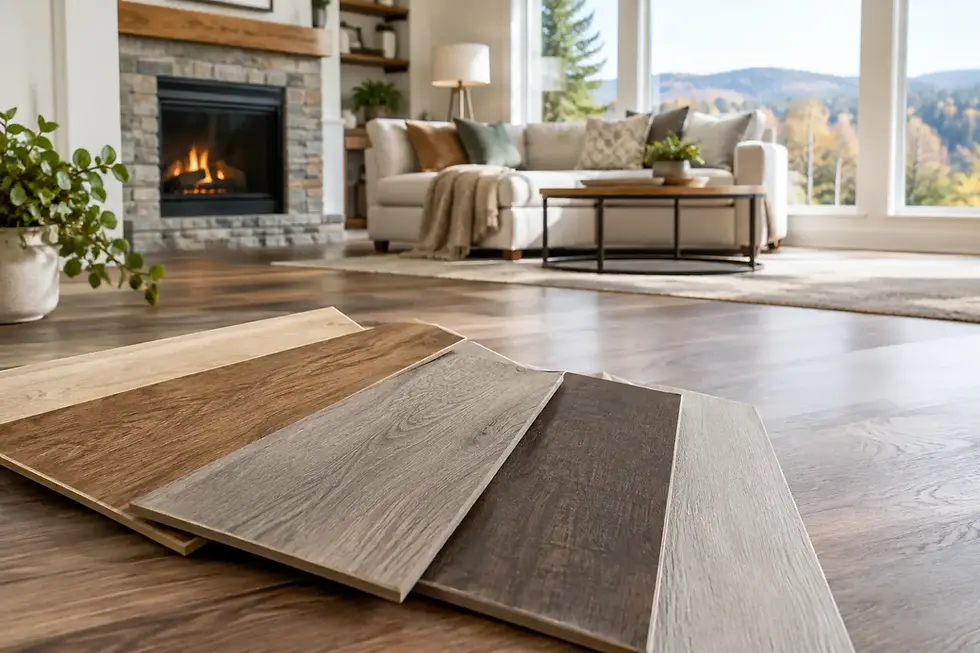
At Piruzza Flooring LLC, an in-home mobile showroom helps homeowners view flooring samples where they will actually live. Seeing a plank or tile beside your wall color, cabinetry, furniture, and basement lighting is more useful than making a decision under showroom lights alone.
A Smart Basement Flooring Decision Protects the Whole Project
The best basement floor is the one that matches the room’s real conditions, not simply the one that looks best in a photo. For many finished basements, luxury vinyl plank offers the strongest balance of water resistance, comfort, style, and everyday durability. Tile remains a dependable choice for wet areas, while engineered hardwood, laminate, and carpet can work beautifully when the basement is dry and the installation plan is appropriate.
Before you settle on a finish, let the condition of the concrete and the way your family will use the space guide the conversation. A carefully prepared floor gives every other part of the basement renovation a stronger place to stand.


Comments