

Best Floors for Rental Properties: A Smart Guide
A rental floor is tested differently than a floor in an owner-occupied home. It sees moving furniture, wet boots, pets, rolling suitcases, and the occasional maintenance issue that cannot wait until next week. The best floors for rental properties balance initial cost with the details that protect an owner’s return: durability, simple repairs, tenant-friendly maintenance, and a finish that still looks cared for at the next showing.
For Pennsylvania property owners, moisture, seasonal temperature changes, and winter grit add another layer to the decision. A beautiful floor that is poorly matched to the space can become an expensive replacement sooner than expected. The goal is not always to select the least expensive material. It is to select flooring that holds its appearance, supports the rental’s positioning, and reduces turnover work for years to come.
What Makes a Floor Right for a Rental?
The right choice begins with the property, not a single material. A well-maintained single-family home in a desirable neighborhood may justify a more elevated finish than a high-turnover apartment or a basement-level unit. Consider how tenants will use the room, how quickly the space needs to be turned between leases, and whether water exposure is likely.
A practical rental floor should resist scratches and stains, be easy to clean without special products, and work with the subfloor beneath it. It should also be available in a style that feels current without being so specific that it limits the home’s appeal. Warm oak visuals, natural tones, and low-variation patterns tend to photograph well and work with a wider range of furniture and wall colors.
Installation matters just as much as the material. Gaps at transitions, insufficient moisture preparation, or an uneven subfloor can shorten the life of even premium flooring. Professional preparation and precise installation help prevent the callbacks, lifting edges, and premature wear that cost more than expected over time.
Best Floors for Rental Properties by Room and Budget
Luxury vinyl plank: the strongest all-around choice
Luxury vinyl plank, often called LVP, is an excellent fit for many rental properties because it combines a wood-look finish with practical performance. Quality LVP is water-resistant or waterproof, comfortable underfoot, and available in styles that give kitchens, hallways, living rooms, and bedrooms a cohesive look. It is especially useful when one continuous flooring choice can reduce transitions and make a smaller rental feel more open.
For rentals with pets, children, or frequent turnover, choose a product with a durable wear layer and a matte or low-sheen surface. A lightly textured plank can help disguise small scratches and everyday dust better than a glossy finish. LVP is not invincible, however. Heavy furniture can dent certain products, and sharp objects can damage the surface. Product quality and correct installation make a real difference.
LVP also performs well in entryways, kitchens, laundry areas, and many finished basements where moisture concerns make hardwood less practical. It offers an elevated appearance without asking tenants to follow a high-maintenance care routine.
Laminate: a value-driven option for dry spaces
Laminate flooring can be a smart choice when budget is a priority and the room is not regularly exposed to standing water. Modern laminate has come a long way in appearance, offering realistic wood visuals and strong resistance to surface scratching. In bedrooms, living areas, and upper-level units, it can deliver a clean, polished update at a controlled price point.
The trade-off is moisture. While water-resistant laminate options are available, laminate generally requires more care around leaks, wet mopping, and kitchen spills than luxury vinyl. Once water reaches the core or seams, swelling can occur. That makes it a better fit for dry, low-risk areas than for full bathrooms, laundry rooms, or properties with a history of plumbing issues.
For a rental, avoid overly smooth, dark laminate. It tends to show dust, footprints, and minor surface marks. Mid-tone wood looks with a subtle texture are typically more forgiving between cleanings and more versatile at turnover.
Tile: the reliable choice for wet areas
Porcelain or ceramic tile remains one of the most durable choices for bathrooms, mudrooms, laundry rooms, and certain entryways. It handles water well, stands up to regular cleaning, and can last for decades when installed correctly. For a rental bathroom, tile is often worth the upfront investment because it protects the space where water damage can become costly fastest.
The details matter. Choose a slip-resistant finish rather than a highly polished surface, particularly for bathroom floors. Larger-format tiles can create a clean, updated look, but grout selection should be practical. A medium neutral grout often hides normal use better than bright white grout, while still giving the room a fresh appearance.
Tile can feel cold and hard in a living room or bedroom, so it is rarely the best whole-home rental solution in Pennsylvania. Use it where its water resistance and durability provide the greatest return.
Hardwood: a premium choice for the right property
Hardwood flooring creates a level of warmth and long-term value that few materials can match. It can be refinished instead of fully replaced, which is a meaningful advantage in a higher-end rental or a historic home where authentic materials support the property’s appeal. Hardwood may also help distinguish a rental competing for longer-term tenants.
Still, hardwood is not the default answer for every landlord. It can scratch, react to moisture, and require more consistent care than vinyl or tile. In a property with frequent tenant changes, large dogs, or an uncertain maintenance history, hardwood may create more risk than reward. It is best reserved for well-positioned rentals where the rent level, tenant profile, and property character justify the investment.
If hardwood is selected, a durable finish and clear care expectations are essential. Area rugs at entrances and furniture pads can help, but the floor must still be able to stand on its own.
Carpet: use it selectively, not everywhere
Carpet still has a place in certain rentals, especially bedrooms in quieter, lower-turnover properties. It adds softness, helps absorb sound in multi-level homes, and can be more economical than hard flooring in the short term. A solution-dyed carpet in a neutral tone offers better stain resistance than many traditional options.
The downside is predictable: carpet holds odors, shows wear paths, and may need replacement between tenants more often than hard flooring. It is rarely a good choice for living rooms, hallways, dining areas, or pet-friendly rentals. When used in bedrooms, keep the surrounding spaces hard-surfaced so cleaning and replacement remain more manageable.
Choose Finishes That Make Turnovers Easier
A rental does not need to look generic to be practical. In fact, a well-selected floor can make listing photos feel more inviting and help prospective tenants picture themselves in the space. The most dependable choices are often light-to-medium wood tones, soft greige, natural oak, and warm neutral tile.
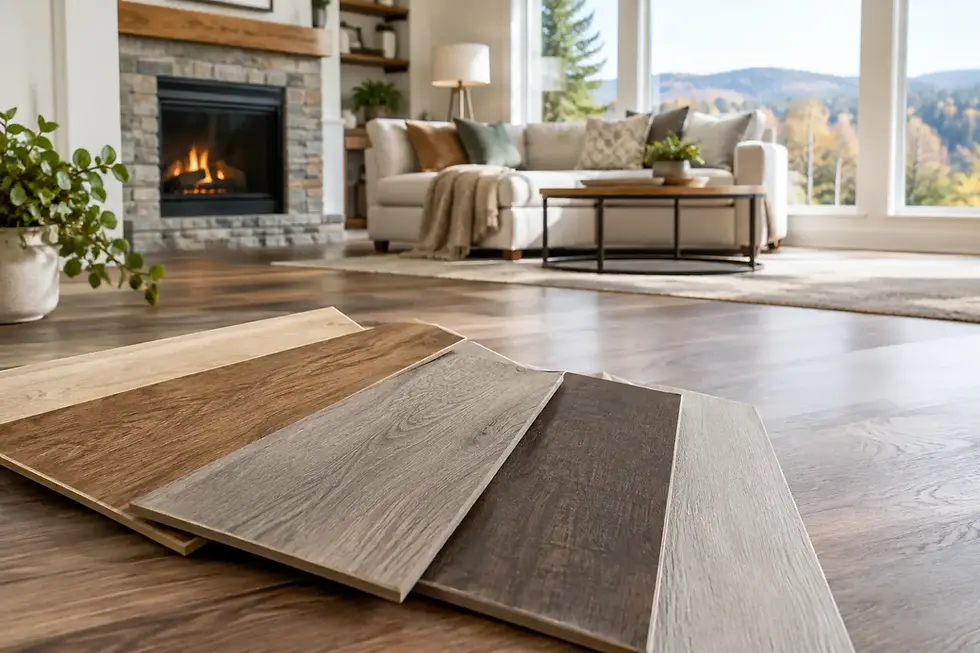
Avoid making a decision based only on a small sample in a showroom. Lighting can change a floor’s undertone dramatically, particularly in rooms with limited natural light or warm paint colors. Viewing samples in the actual rental helps confirm whether a gray floor looks cool and harsh or balanced and modern, and whether a wood tone works with existing cabinets, countertops, and trim.
Also consider plank width and pattern repetition. Wide planks can make a home feel more current, but a product should still fit the scale of the room. Lower-quality visuals with obvious repeating patterns can weaken the finished result, especially in open-concept spaces.
Do Not Overlook the Subfloor and Installation Plan
Many rental flooring problems begin below the surface. Before replacement, the existing floor and subfloor should be evaluated for moisture, movement, uneven areas, and old adhesive. Installing over a problem surface may save time initially, but it can lead to noise, separation, cracked tile, or visible imperfections later.
A clear installation plan should also account for transitions, baseboards, door clearances, appliance movement, and scheduling around tenant occupancy. For occupied rentals, careful coordination keeps disruption to a minimum. For vacant units, completing flooring before painting touch-ups and final cleaning can help protect the new surface from unnecessary damage.
Piruzza Flooring LLC helps Pennsylvania property owners compare materials in the rooms where they will actually be used, with a mobile showroom that makes color and texture decisions more straightforward. That practical view is especially valuable when a rental needs to look finished, durable, and ready for its next tenant.
A Better Long-Term Rental Flooring Strategy
Consistency is often more valuable than chasing the lowest price on each individual turnover. Using one or two dependable flooring systems across a portfolio simplifies future repairs, makes it easier to match materials, and creates a recognizable standard of quality for tenants. Keep a small amount of extra material from every installation for future damage repairs.
For most rentals, LVP in primary living areas, tile in bathrooms, and carefully selected carpet only in appropriate bedrooms creates a durable, welcoming balance. Higher-end homes may warrant hardwood, while budget-conscious units may benefit from laminate in dry areas. The best decision is the one that fits the property’s rent level, expected wear, and long-term maintenance plan - not simply its first-day price.
A floor should make the property easier to own as well as easier to rent. When the materials are chosen with real use in mind and installed with care, each turnover becomes less of a repair project and more of an opportunity to welcome the next tenant into a home that feels genuinely well maintained.


Comments