

How to Compare Flooring Samples in Your Home
A flooring sample can look perfect under showroom lighting and completely different next to your kitchen cabinets, sofa, or front-door sunlight. That is why learning how to compare flooring samples at home matters. The right floor should not only look beautiful in a small swatch. It should feel right in the rooms where your family walks, cooks, relaxes, hosts, and lives every day.
A thoughtful comparison protects your investment. It helps you move beyond a first impression and choose a material, color, and finish that will complement your home while holding up to its real demands.
Start With the Room, Not the Sample
Before putting samples side by side, consider what the room needs from its flooring. A quiet guest room, a busy family kitchen, and a commercial entryway may all call for different performance priorities.
Think about foot traffic, pets, children, moisture, direct sunlight, and how often you want to clean or maintain the floor. Hardwood brings warmth, natural variation, and long-term appeal, but it may require more attention in moisture-prone spaces. Luxury vinyl plank offers convincing wood looks with strong water resistance and easy maintenance. Laminate can provide a durable, attractive finish at a practical price point, depending on the product and where it will be installed.
This does not mean one material is always better than another. It means the best choice depends on the room and your expectations for it. Establish those needs first, then judge every sample against them.
How to Compare Flooring Samples in Real Light
Light has more influence on flooring color than most homeowners expect. A warm oak can appear honey-toned in morning sun, more neutral under cloudy daylight, and deeper beneath warm interior bulbs. Gray floors may take on blue, green, or even purple undertones depending on the room.
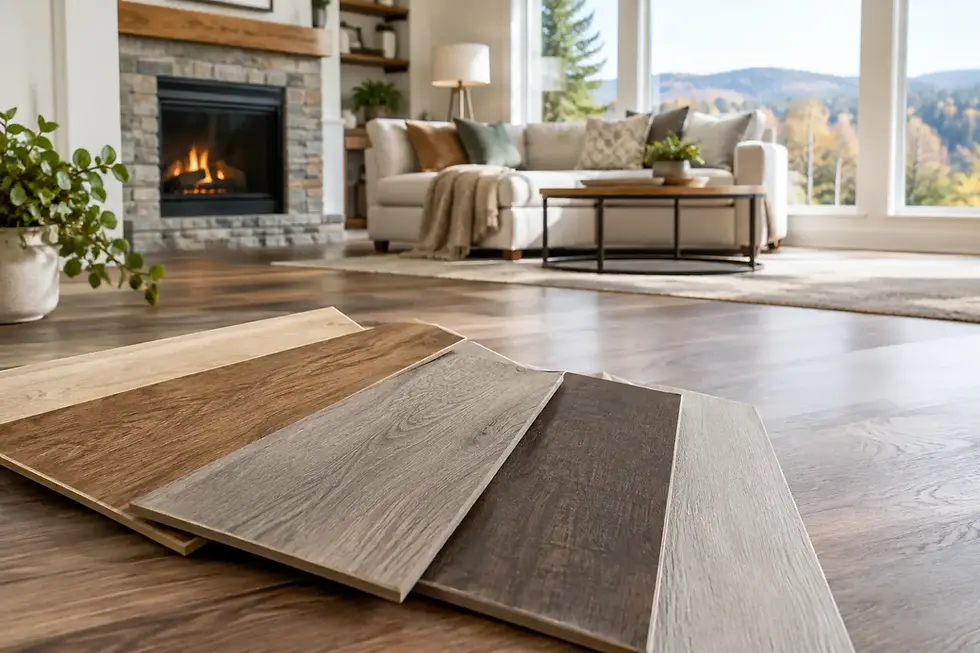
Bring samples into the actual space and view them at several times of day. Place them near windows, in corners, beside doorways, and under the main lighting used at night. Do not make a decision after seeing a sample for only a few minutes. Leave it in the room for a day or two if possible.
Look at each sample both flat on the floor and held upright against a wall or cabinet. Flooring is usually seen from above, but viewing it vertically can reveal undertones more clearly. This is especially useful when comparing wood-look planks against painted trim, cabinetry, tile, or wall color.
If a room has very little natural light, choose based on that reality rather than the look you hope to create. A darker floor can feel rich and grounded, but it may make a small, low-light room feel more enclosed. A lighter finish can brighten the space, although very pale or smooth finishes may show dirt and scuffs more readily in active areas.
Compare Against Fixed Features First
Paint can be changed. A countertop, brick fireplace, stone hearth, or kitchen cabinet is much harder and more expensive to replace. Place flooring samples next to the permanent finishes that will remain in the room.
Pay close attention to undertones. Cool gray flooring beside warm beige cabinets can feel disconnected, even if both colors look appealing separately. Natural wood tones are often more flexible, but they still need to relate to the room's existing finishes. The goal is not to match every color exactly. A home looks more considered when materials coordinate without becoming overly uniform.
Request More Than One Small Swatch
Small samples are useful for identifying color families, but they can hide the characteristics that make a floor feel natural or repetitive after installation. Whenever possible, compare full planks, multiple boards, or larger sample pieces.
With hardwood and luxury vinyl plank, look at the variation from piece to piece. Some products have subtle movement and a calm, consistent appearance. Others have strong grain, knots, mineral streaks, and color shifts. Neither approach is wrong, but bold variation can feel busier across a large open floor.
For laminate and vinyl, examine the printed pattern repeat. If you can identify the same knot or grain pattern quickly across several boards, imagine seeing it throughout an entire living room. Premium materials often provide more varied visuals, helping the finished floor look more believable and less repetitive.
Also consider plank width and length. Wider planks can make an open room feel more expansive and contemporary, while narrower boards may better suit a traditional home or a smaller space. The right scale depends on room size, ceiling height, adjoining rooms, and the character of the home.
Look Beyond Color to Finish and Texture
Color gets most of the attention, but finish can determine how a floor performs and how often it looks clean. A glossy surface reflects light and can feel formal, yet it may show scratches, dust, and footprints. Matte and low-sheen finishes tend to be more forgiving for busy households and offer a relaxed, current look.
Run your hand over each sample. Embossed texture can add realism to wood-look flooring, while smoother surfaces may be easier to clean. Wire-brushed hardwood has a textured, character-rich appearance that can help disguise small marks, but its grooves may collect more dust than a smooth finish.
Ask how the sample will feel underfoot as well. Flooring has a visual role, but it also affects the comfort of everyday life. Underlayment, subfloor condition, product thickness, and installation method all influence sound, warmth, and feel.
Test Samples Against Everyday Life
A good sample comparison includes practical testing, not just design decisions. Place the samples where your household naturally creates wear: near the entry, beside the kitchen island, or in the path from the garage to the living area.
You do not need to damage a sample, but you can learn a great deal from normal handling. Walk on it with socks and shoes. Set a chair leg or a small rug edge on it. Wipe it with a slightly damp cloth. Notice whether the texture catches pet hair, whether the finish feels slippery, and whether the color makes crumbs or dust especially noticeable.
For rooms exposed to water, ask specific questions about the product rather than assuming every vinyl or laminate floor performs the same way. Water-resistant and waterproof are not interchangeable terms. The material, seams, installation system, and moisture conditions all matter. Professional guidance is especially valuable in bathrooms, laundry rooms, below-grade spaces, and homes with changing humidity levels.
Compare the Construction Behind the Look
Two samples can appear nearly identical while offering very different value over time. Ask about the details that are not obvious from the surface: wear layer thickness for luxury vinyl, core construction for laminate, hardwood species and plank construction, finish quality, warranty coverage, and recommended maintenance.
Installation requirements deserve equal attention. Some products are better suited to floating installation, while others may need to be glued or nailed down. Subfloor preparation, transitions between rooms, stair details, and existing floor height can all affect the final appearance and cost.
A floor is only as dependable as the preparation and installation beneath it. A carefully selected material can still disappoint if it is installed over an uneven subfloor or without the correct expansion allowances. Comparing samples with an experienced flooring professional helps connect the design choice to the conditions of your actual home.
Narrow Your Choices With a Simple Side-by-Side Review
Once you have selected two or three serious contenders, compare them in the same location and use the same criteria. Keep the decision grounded in both style and performance:
Does the color work in morning, afternoon, and evening light?
Does it coordinate with your cabinets, trim, furniture, and existing finishes?
Will its finish be forgiving in your household's highest-traffic areas?
Does the material fit the room's moisture, maintenance, and comfort needs?
Does the product's construction and warranty support the length of time you plan to stay in the home?
Avoid choosing solely because a sample looks dramatic on its own. Flooring covers a large visual area, so the best option is often the one that still feels balanced after repeated viewing. It should support the room rather than compete with every other design element.
See Samples Where They Will Be Installed
An in-home consultation removes much of the guesswork from flooring selection. Piruzza Flooring LLC brings samples into the spaces that matter, making it easier to compare tone, texture, and material performance under your home's actual lighting and alongside your existing finishes.
This approach is particularly helpful when connecting several rooms. You may want one continuous flooring style for a more open, cohesive feel, or you may need thoughtful transitions between a hardwood living area, a durable kitchen floor, and a moisture-conscious bathroom surface. Seeing options in place makes those decisions clearer before installation begins.
The right flooring sample should continue to look right after the initial excitement fades. Give it time in your home, judge it under real conditions, and choose the material that brings lasting comfort, durable performance, and a finish you will be proud to see every day.


Comments