

Flooring Contractor Versus DIY: Which Is Better?
A new floor can look straightforward until the first row meets a crooked wall, an uneven subfloor, or a doorway that no longer clears properly. The flooring contractor versus DIY decision is not simply about who can lay planks. It is a decision about your time, your home’s condition, the material you choose, and how long you expect the finished floor to perform.
For some homeowners, a small, square room with click-lock laminate may be a satisfying weekend project. For others, especially those replacing flooring throughout a first floor or installing hardwood in a home they plan to enjoy for years, professional installation protects a much larger investment. The right answer depends on the project, but the trade-offs deserve an honest look before boxes of flooring arrive at your door.
Flooring Contractor Versus DIY: Start With the Real Scope
Most flooring projects include more than removing an old surface and installing a new one. Furniture may need to be moved. Existing carpet, vinyl, tile, or hardwood may need to be removed and disposed of. Baseboards, trim, transitions, doors, and vents all need attention. Then there is the subfloor, which determines whether the new floor will feel solid underfoot or develop movement, gaps, and noise over time.
A DIY project is most realistic when the room is small, the subfloor is flat and dry, the layout is simple, and the homeowner has the time and patience to learn the process. Luxury vinyl plank and laminate are often more approachable than nail-down hardwood, but they still require careful measuring, expansion gaps, staggered seams, and clean cuts around obstacles.
The scope changes quickly in older Pennsylvania homes. Floors can slope between rooms, subfloors can have water damage, and walls may not be square. A professional installer recognizes these conditions before they become visible problems in the finished floor. That assessment is one of the most valuable parts of hiring a contractor: the work is planned around the home you actually have, not the idealized room shown in an installation video.
The Cost Question Is Bigger Than Labor
DIY appears less expensive because you are not paying installation labor. That can be true, particularly for a modest room with a forgiving material. But labor is only one line in the full project cost.
Homeowners should account for underlayment, moisture barriers, adhesives, blades, spacers, leveling materials, trim, transition pieces, tool rentals, waste, delivery, old-floor removal, and disposal. A first-time installer may also order too little material, make cutting mistakes, or discover that the subfloor needs repair after the old flooring is gone.
Professional installation has a clearer upfront cost, but it often reduces expensive surprises. A contractor can calculate material quantities, identify preparation needs, and recommend products that fit the room’s use. That is especially helpful when comparing luxury vinyl plank, laminate, and hardwood. The least expensive material is not always the best value if it is poorly suited to moisture, pets, heavy traffic, or the style of the adjoining rooms.
There is also the cost of doing the project twice. A floor that separates at the seams, telegraphs subfloor flaws, or shows uneven transitions may need partial repair or complete replacement. When flooring is a long-term improvement, workmanship deserves the same consideration as material price.
Where DIY Savings Can Be Real
DIY can make financial sense when you have a simple space, the right tools, and flexibility in your schedule. A guest room, a basement room with a properly prepared concrete slab, or a low-traffic office may be a manageable place to build experience. Choose a material with installation instructions you understand, buy enough extra product for cuts and future repairs, and inspect the subfloor before committing to the project.
Saving money on labor is most effective when it does not require shortcuts. If the job calls for floor leveling, moisture testing, detailed stair work, or extensive trim changes, the savings can disappear quickly.
Preparation Determines How a Floor Feels for Years
The finish floor gets the attention, but preparation carries the load. Even premium flooring can fail early when installed over a surface that is uneven, damp, damaged, or improperly cleaned.
Professional installers evaluate flatness and use the preparation method appropriate for the material. Some floors need underlayment. Some require a vapor barrier. Hardwood needs time to acclimate to the home’s conditions before installation. Glue-down products demand a properly prepared substrate and careful adhesive application. These details are not optional extras. They affect stability, sound, comfort, and warranty coverage.
DIY instructions can make preparation seem simple because every home is different. A homeowner may not know whether a slight dip is within tolerance, whether a basement slab has excess moisture, or whether an existing vinyl floor can remain in place. An experienced contractor does. That knowledge helps prevent cupping hardwood, movement in luxury vinyl plank, cracked joints, and floors that feel hollow as you walk across them.
Precision Shows Up in the Details
Flooring installation is a visual trade. You notice the plank color and grain first, but the quality of the work appears in the details: straight starter rows, balanced cuts at opposing walls, consistent spacing, flush transitions, and trim that looks intentional rather than added as an afterthought.
Layout matters in open-concept homes, hallways, kitchens, and rooms with strong natural light. The direction of the planks can make a space feel wider, longer, or more connected. A contractor can help you choose a layout that supports the design of the home while accommodating the material’s installation requirements.
Doorways and transitions are another frequent challenge. Different flooring heights must meet cleanly, and doors may need to be trimmed for proper clearance. In bathrooms and laundry areas, edges and transitions need particular care because moisture can reach places that are difficult to see. Precision in these areas protects both appearance and performance.
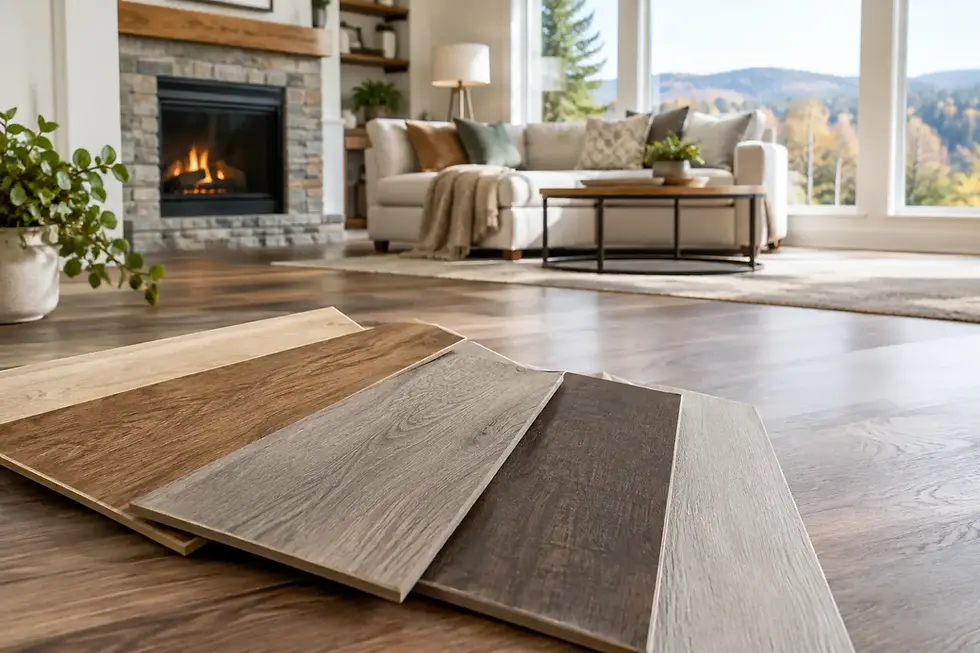
This is where a mobile showroom and in-home consultation can be especially useful. Seeing samples beside your cabinets, wall colors, and natural lighting makes it easier to choose a floor that feels right in your actual space, not just under bright store lighting.
Time, Disruption, and Accountability
DIY flooring can take several weekends, especially when you are balancing work, family, and the normal demands of a household. A room may remain partly unusable while you learn the process, make cuts, wait for materials, and resolve unexpected issues. That timeline is acceptable for some homeowners. For a busy family, a move-in deadline, or a commercial space, it can create real disruption.
A flooring contractor brings a defined process, skilled labor, and a coordinated schedule. Materials, preparation, installation, and finishing details are managed as one project. The goal is not only to work efficiently, but also to leave the home clean and ready for the next stage of your renovation.
Accountability matters after installation as well. Many flooring products have manufacturer requirements related to moisture conditions, installation methods, and approved underlayments or adhesives. Professional installation can support warranty protection when the work follows those specifications. If a concern arises, you also have a knowledgeable point of contact rather than trying to diagnose the issue alone.
When Hiring a Flooring Contractor Is the Better Investment
Professional installation is usually the stronger choice for whole-home flooring, hardwood, staircases, intricate layouts, rooms with moisture concerns, uneven subfloors, and projects where the finished result needs to support home value. It is also a practical choice for homeowners who want guidance selecting materials rather than making a costly decision from a small sample or online image.
For commercial properties, professional installation is often essential. High-traffic surfaces need durable product recommendations, reliable scheduling, and workmanship that holds up to daily use. A business cannot afford a project that lingers or a floor that fails early.
Piruzza Flooring LLC approaches these projects as real-home transformations, combining material guidance with precision-focused installation. The goal is a floor that works for the way your household lives, from active family rooms to quieter bedrooms and updated bathrooms.
Make the Choice Based on the Finish You Expect
There is nothing wrong with taking on a manageable DIY flooring project when the room, material, and conditions are right. It can be rewarding work. Just avoid judging the project only by the cost of labor. Consider preparation, tools, your available time, the risk of waste, and what a repair would cost if the installation does not perform as expected.
When you want flooring that feels solid, looks intentional, and supports your home for years, expert planning and installation are part of the investment. Start with a close look at the room, the subfloor, and how your family uses the space. That clarity will point you toward the decision that makes your new floor feel worthwhile every day.


Comments